From Waves to Electricity
An Overview of Wave Energy Converter Systems and Technologies for Sustainable Ocean Energy
Keywords:
Wave Energy, Wave Energy Converter, Power Take-Off, Oscillating Water Column, Marine Renewable EnergyAbstract
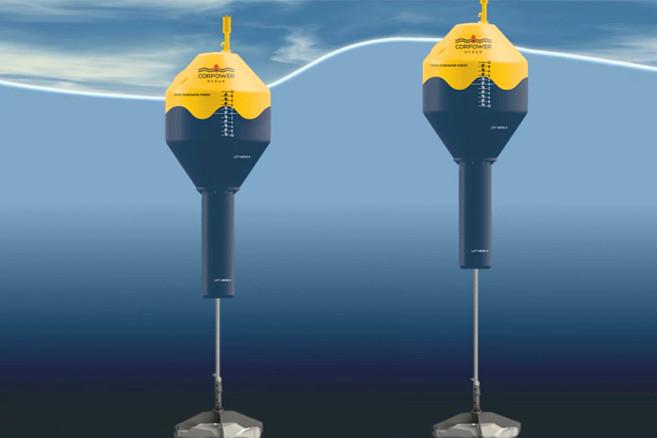
Ocean waves are one of the renewable energy sources that have great potential because they are available naturally and have relatively consistent energy characteristics in certain marine areas. The utilization of wave energy is carried out through Wave Energy Converter (WEC) technology, which is a system that converts wave mechanical energy into electrical energy through hydrodynamic and Power Take-Off (PTO) mechanisms. Various types of WEC have been developed, including point absorbers, attenuators, oscillating water column (OWC), oscillating wave surge converters, and overtopping systems. This study aims to review the development of wave energy conversion systems and technologies by focusing on the working principle, type of device, PTO system, control strategy, and challenges of its application in the marine environment. The study method was carried out through a review of a number of studies and scientific articles on the development of WEC and wave energy conversion technology. The results of the study show that the development of WEC is not only focused on improving the ability to capture wave energy, but also on the development of hydrodynamic designs, PTO systems, control strategies, array configurations, and integration with offshore energy infrastructure. However, investment costs, resistance to extreme marine conditions, conversion efficiency, maintenance, and technological readiness remain challenges in moving towards commercial-scale implementation. The development of adaptive control systems, more efficient PTO technology, and the integration of WEC with other marine energy systems are important directions to improve the reliability and competitiveness of wave energy in the future.
References
[1] B. Drew, A. R. Plummer, and M. N. Sahinkaya, “A review of wave energy converter technology,” Proceedings of the Institution of Mechanical Engineers, Part A: Journal of Power and Energy, vol. 223, pp. 887–902, 2009, doi: 10.1243/09576509JPE782.
[2] B. Zhou, Z. Zheng, Y. Yao, S. He, P. Jin, H. Du, Y. Yang, and H. Shi, “Wave energy converters: A comprehensive review of research progress, key challenges, and future trends,” Applied Energy, vol. 413, art. 127722, 2026, doi: 10.1016/j.apenergy.2026.127722.
[3] “Wave Energy Conversion through Oscillating Water Columns: A Review,” Journal of Marine Science and Engineering, vol. 12, no. 2, art. 342, 2024.
[4] B. Yang, J. Duan, Y. Chen, S. Wu, M. Li, P. Cao, and L. Jiang, “A critical survey of power take-off systems based wave energy converters: Summaries, advances, and perspectives,” Ocean Engineering, vol. 298, art. 117149, 2024, doi: 10.1016/j.oceaneng.2024.117149.
[5] A. Abbasi and H. Ghassemi, “A comparative state-of-the-art review of wave energy converters: Point absorbers, linear absorbers, and hybrid systems,” Applied Energy, vol. 409, art. 127487, 2026.
[6] “A review on the technical development of combined wind and wave energy conversion systems,” Energy, vol. 294, art. 130885, 2024, doi: 10.1016/j.energy.2024.130885.
[7] W. A. Arrosyid, W. R. Sari, K. T. Waskito, Yanuar, I. K. A. P. Utama, Q. M. B. Soesanto, A. Bramantya, and B. Nugroho, “Recent advancements in wave energy converter technologies: A comprehensive review on design and performance optimization,” 2025.