Integration of Underwater Technology in Sustainable Development
Social and Environmental Perspectives
Keywords:
Subsea Technology, Sustainable Development, Social Impact, Environmental Sustainability, Coastal CommunitiesAbstract
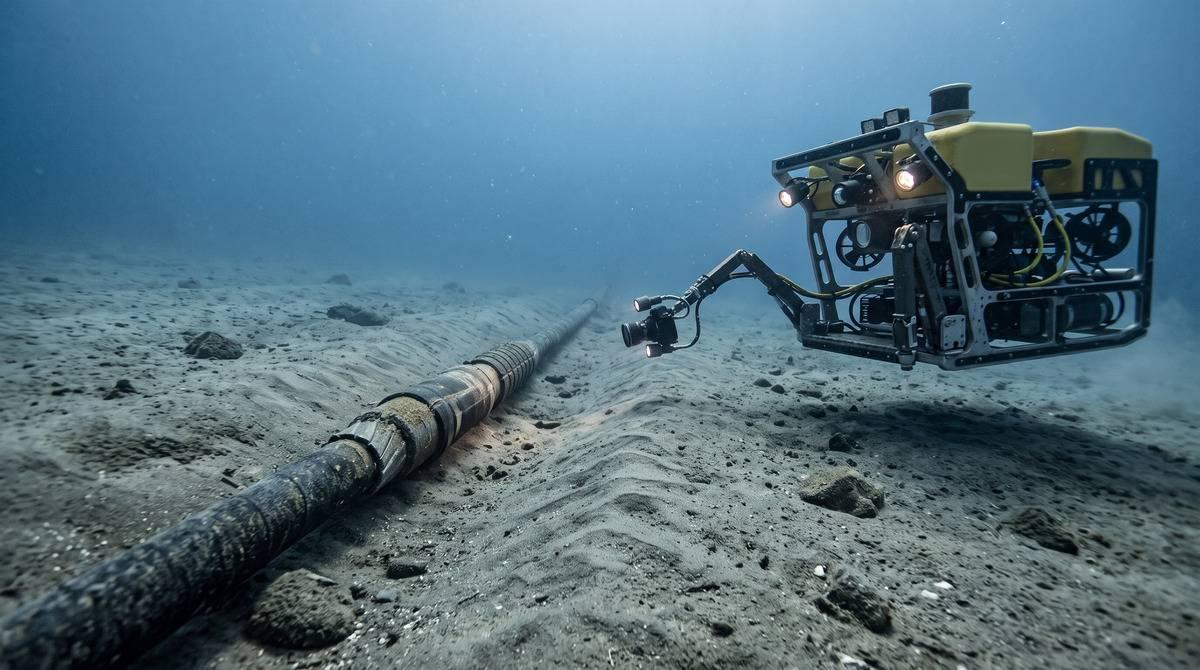
The development of subsea technology has opened up great opportunities for the exploration of marine resources, but its implementation often ignores the sustainable social and environmental dimensions. This article aims to examine how the integration of subsea technology can be aligned with the principles of sustainable development, especially from a social and environmental perspective. This study uses a systematic literature review approach by analyzing various studies related to the application of underwater technology, its impact on marine ecosystems, and its implications for the socio-economic life of coastal communities. The results show that while subsea technologies such as underwater monitoring systems, renewable energy pipelines, and marine robotics provide significant benefits in exploration and conservation efficiency, there are serious challenges related to technology access gaps, potential damage to deep-sea ecosystems, and marginalization of local communities in the decision-making process. This article recommends the need for a policy framework that integrates the principles of triple bottom line (economic, social, environmental) in each stage of subsea technology development, as well as the importance of the active involvement of coastal communities as key stakeholders. These findings are expected to serve as a reference for policymakers, academics, and maritime industry practitioners in designing inclusive and sustainable marine development strategies.
References
[1] F. Nauert and P. Kampmann, “Inspection and maintenance of industrial infrastructure with autonomous underw` ater robots,” Front. Robot. AI, vol. 10, 2023, doi: 10.3389/frobt.2023.1240276.
[2] D. Agusdinata and C. Robbins, “Sustainability issues of deep-sea mining: a bibliometric review and research priorities,” Environ. Res. Lett., vol. 20, 2025, doi: 10.1088/1748-9326/ae013f.
[3] T. Sutherland and G. Bopp, “The Pacific futures of subsea data centers,” New Media Soc., vol. 25, pp. 345–360, 2023, doi: 10.1177/14614448221149944.
[4] M. M. Islam, M. I. Khan, G. Mondal, M. N. Yeasmin, and A. Barman, “Social sustainability in Bangladesh marine fisheries management: A case from Hatiya fishing community,” Heliyon, vol. 10, 2024, doi: 10.1016/j.heliyon.2024.e34124.
[5] L. Williams, A. Martin, and A. Stirling, “‘Going through the dance steps’: Instrumentality, frustration and performativity in processes of formal public participation in decision-making on shale development in the United Kingdom,” Energy Res. Soc. Sci., 2022, doi: 10.1016/j.erss.2022.102796.
[6] R. Iswara and A. Afriansyah, “Arrangement of Submarine Cables and Pipelines as Part of Marine Spatial Planning in Indonesia,” Jambe Law J., 2022, doi: 10.22437/jlj.5.1.1-38.
[7] H. Ahlborg, I. Ruiz-Mercado, S. Molander, and O. Masera, “Bringing Technology into Social-Ecological Systems Research—Motivations for a Socio-Technical-Ecological Systems Approach,” Sustainability, 2019, doi: 10.3390/su11072009.
[8] M. Yet, P. Manuel, M. DeVidi, and B. MacDonald, “Learning from Experience: Lessons from Community-based Engagement for Improving Participatory Marine Spatial Planning,” Plan. Pract. Res., vol. 37, pp. 189–212, 2022, doi: 10.1080/02697459.2021.2017101.
[9] D. Amun et al., “Assessment of scientific gaps related to the effective environmental management of deep-seabed mining,” Mar. Policy, 2022, doi: 10.1016/j.marpol.2022.105006.